For more than a few years I have worked with (and in) the public and private school systems in the Southeastern USA, and I have observed the varied security policies adopted by the various administrations. It is amazing how one school system will passionately enforce policy, while another may view policy as more of a guideline, while exhibiting extreme tolerance of
rule-breakers. If it were up to me (and it's not) my school would take steps to add the following items and programs to its security policies:

- A Current Student ID Card, worn by every student every day. This card would have a barcode printed on the surface that enables the student to pay for lunch, check out a library book, and scan against a database for verification of the card's validity.
- A Custom Printed Lanyard, worn by every student every day. This lanyard would match the color scheme of the school and the aforementioned Student ID Card. Lanyards provide a long-distance means of verification. If you see a kid not wearing a lanyard that matches school colors, chances are they are not a student.
- An Electronic Visitor Management System in the front office. This system would allow
 visitors to electronically check in (by scanning a drivers license or typing their name into a touch screen interface) and select the reason they are visiting, the student they are visiting, and the system would email the teacher or employee if they are the visited party.
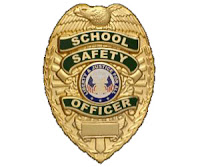
- A School Resource Officer (or two) to check Student ID Cards. These Police Officers are a vital part of a safe school environment, when deemed necessary. I have met several that are performing their job to the fullest, and act as a role model for some students.
- A Replacement Fee for Lost ID Cards. This has been shown to be an effective deterrent for students who repeatedly "forget" their cards and come to school without valid ID. A fee of $5 is usually just about right, as it compensates the school system for their supply costs, as well as their time spent when making a replacement card.
- A Temporary Badge Printing Solution. This is another way of creating a replacement student
 ID without incurring the expense of the $1-$2 plastic ID Card. This can be as simple as a Dymo Label Printer attached to the Student ID System.
- Faculty and Staff Who are not Afraid to Care. I have seen school administrators who are loyal and caring employees, but who cut far too many breaks when ID Cards are lost, forgotten, or simply not worn properly by students. If you enforce the rules, they are less often broken.
- Locked Doors. If a school has 20 doors that remain open, that school is asking for someone to walk right in. All entry points except those that are under the visual control of office staff and faculty should remain locked. If a student or employee exits the side, let them walk around to the front to re-enter. This is common sense stuff. If you can't see the door, lock it 24 hours a day. Free exit should be maintained of course.
- Faculty and Staff ID Cards, worn every day. This is a no-brainer. If an adult is in a school, we should not have to assume they are supposed to be there. One should only have to take a quick glance at their ID Card and Matching Lanyard.

- CCTV Security Cameras in problem areas. The tapes don't lie, and there's no witness like a DVR. Think of the rising feeling of accountability that would occur if there were a camera looking down the hall at a front entrance to each school. If a DVR is set to only capture motion events, the review times are much more efficient. Video of an event, good or bad, is priceless.

- Card-Controlled Security Access on sensitive doors. If costly IT equipment or student medication is kept in a locked cabinet in a locked office, that's great. But, there remains the possibility that a key may be copied. Once again, 1 to 1 accountability is the key to maintaining an accurate record of "who went where, when". Electronic Access Control is the perfect solution for this.
This may not be in affect anywhere in the country, in a K-12 environment, but it is most certainly theory that is applied every single day in corporate America. Workers, both executive and hourly, are often required to wear a badge, swipe that card for access to doors, and even log on to a PC using the same credential. Why not apply that to one of the most widespread institutions in our country, the school? We've all been there, and our children will be there too. Let's keep them as safe as possible so they can get on with the real business at hand, quality learning for the future.
Travis Brewington is in sales and marketing support at the Laminex family of companies. He can be reached at (800) 831-2995, Ext. 111 or at TravisB@laminex.com

 DHS all but told the state Monday that it was the country's "weakest link" and that the state needed to change its licensing ways or face the fed's wrath.


